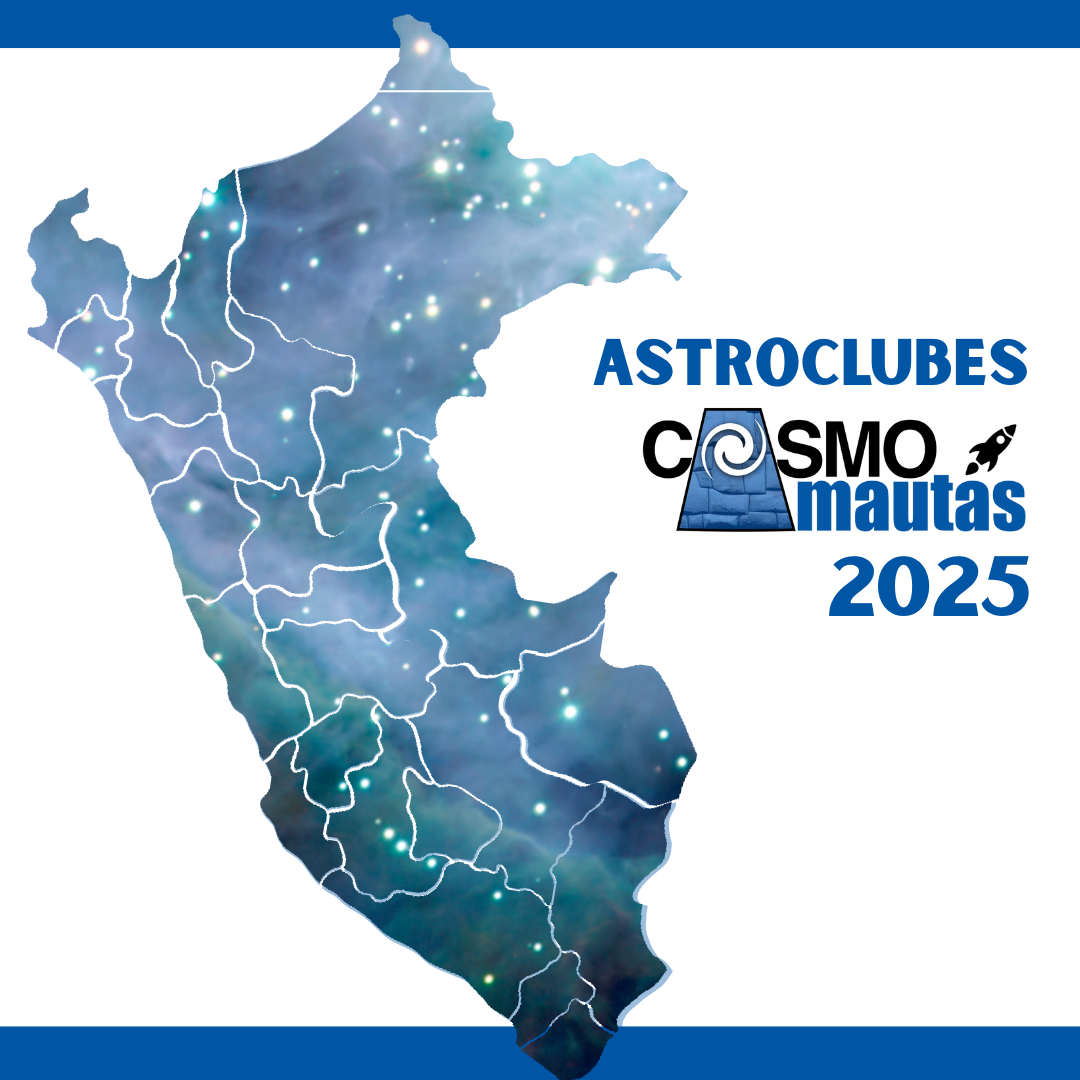
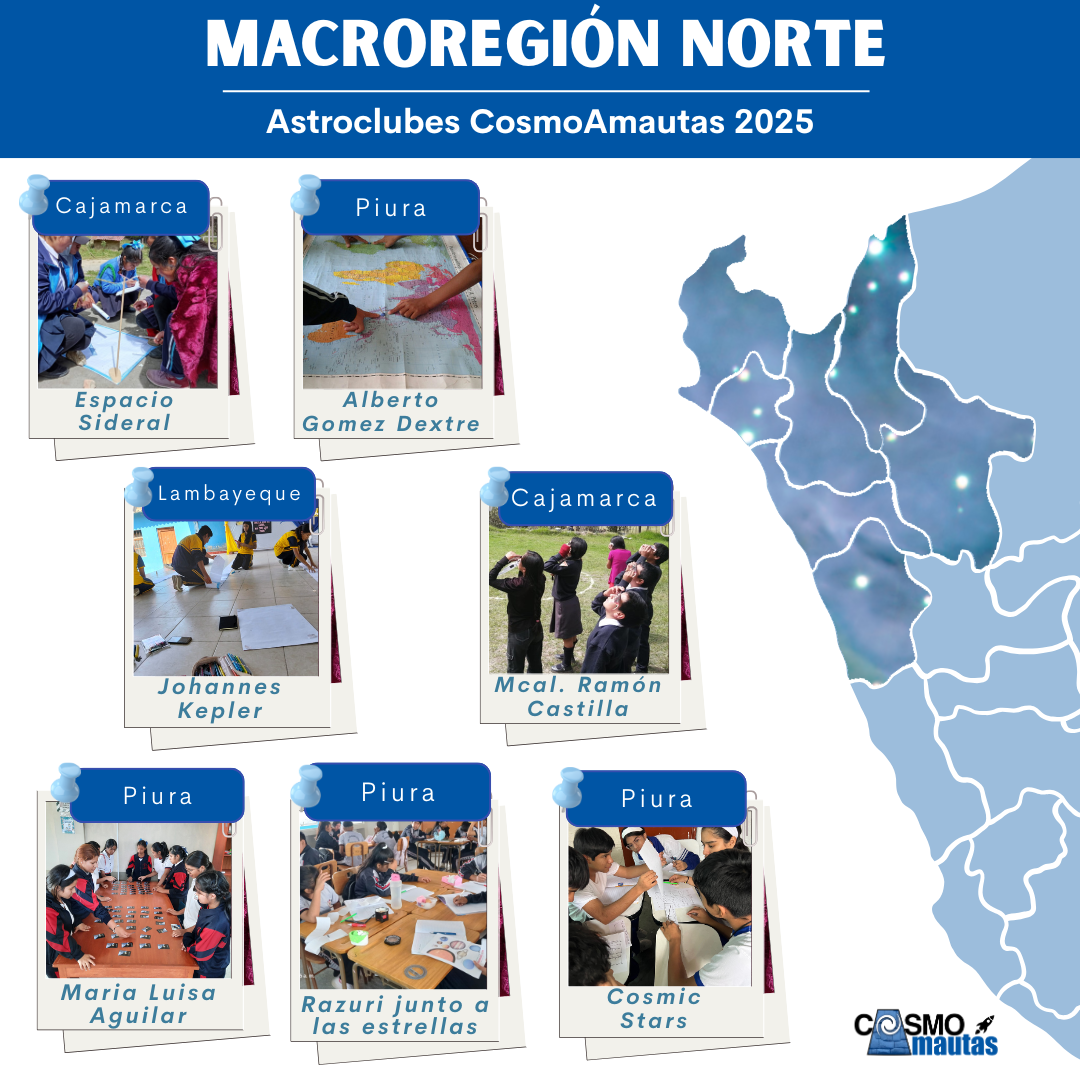
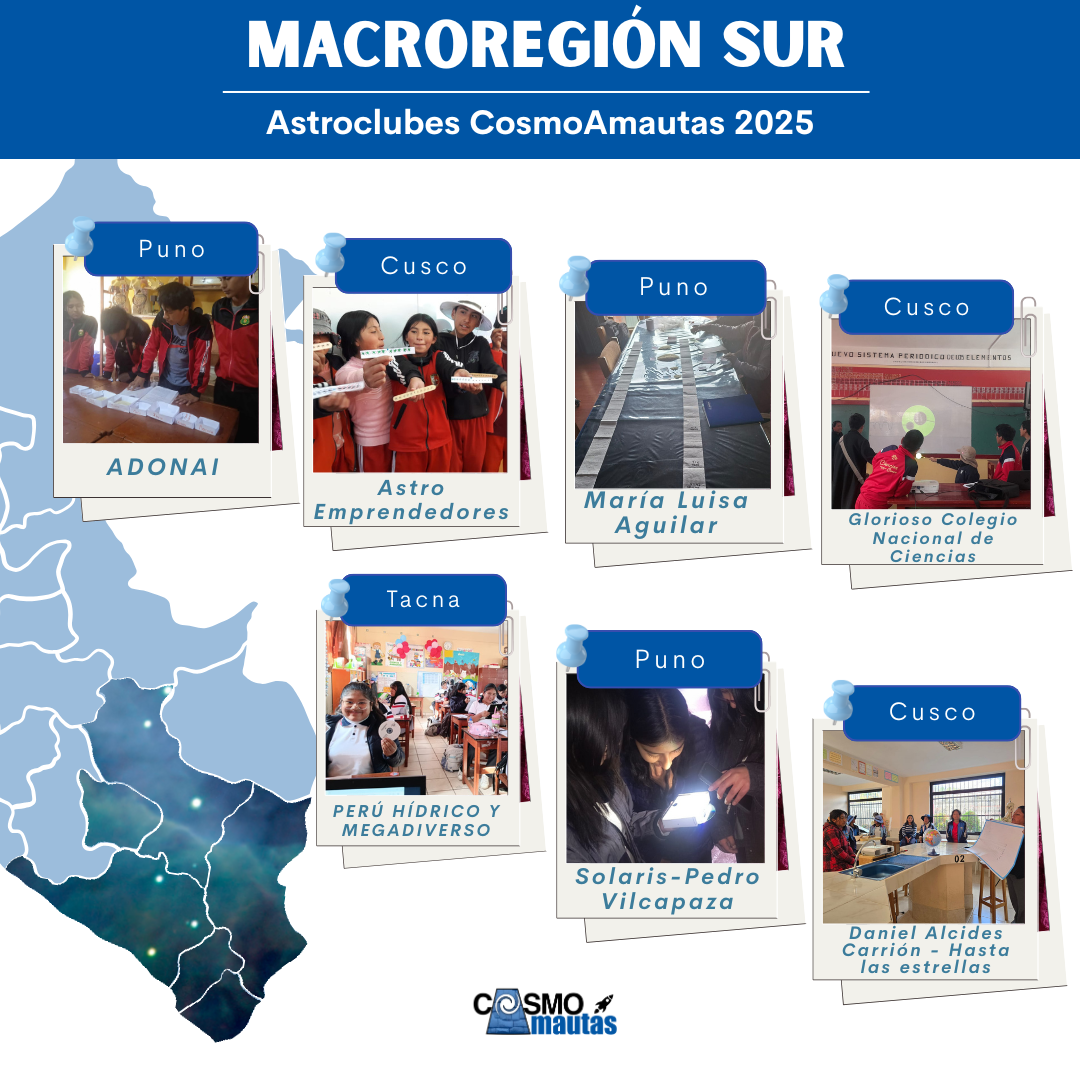
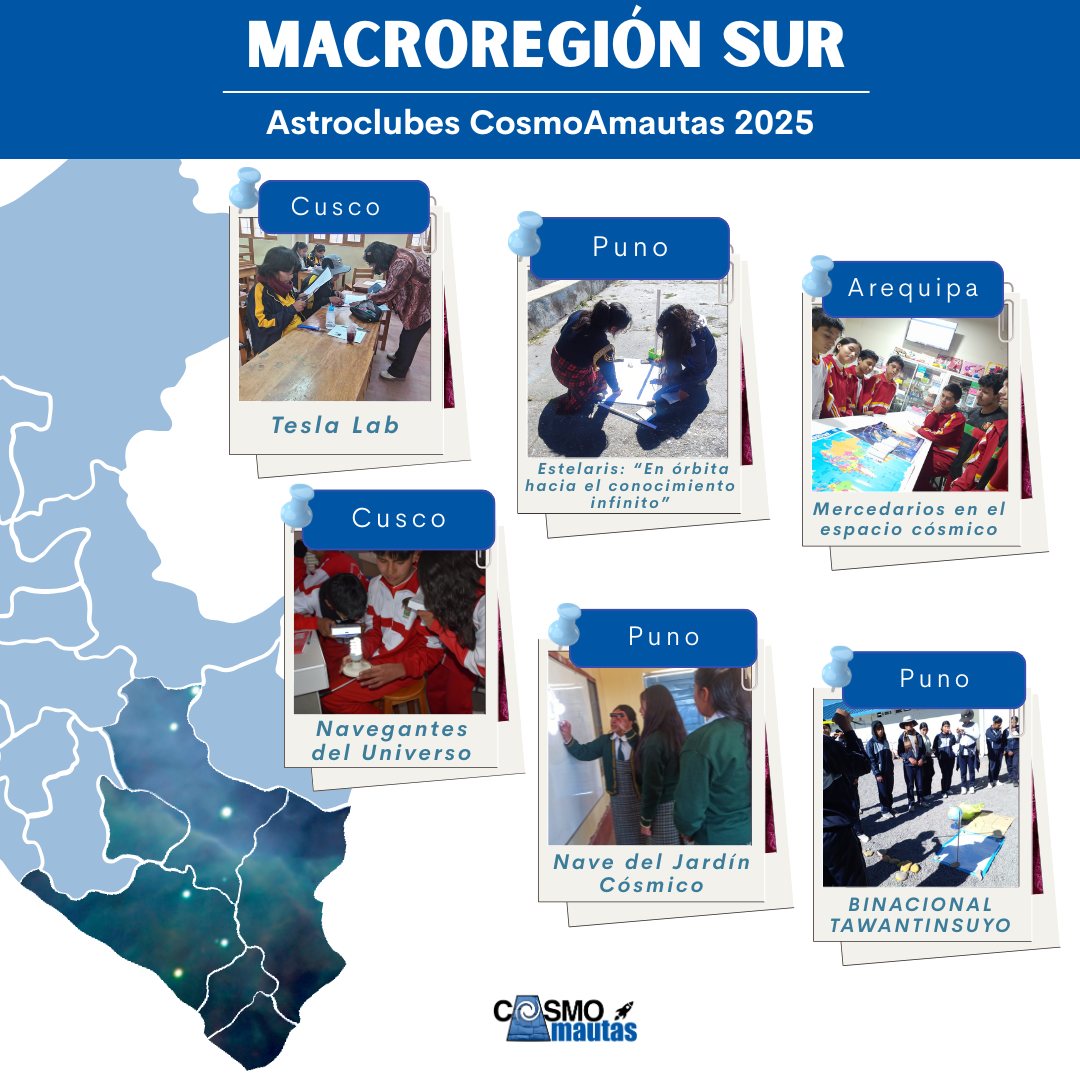
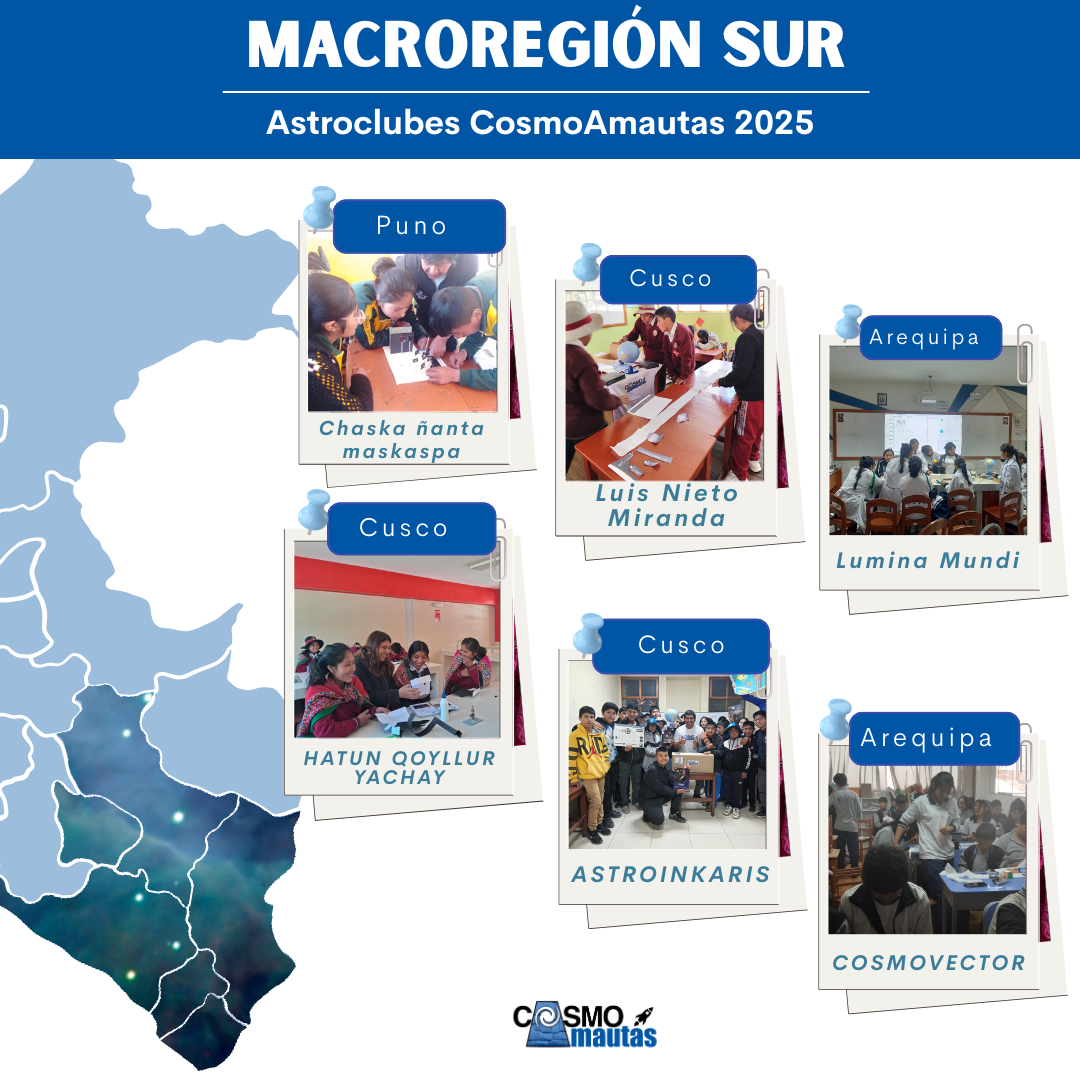
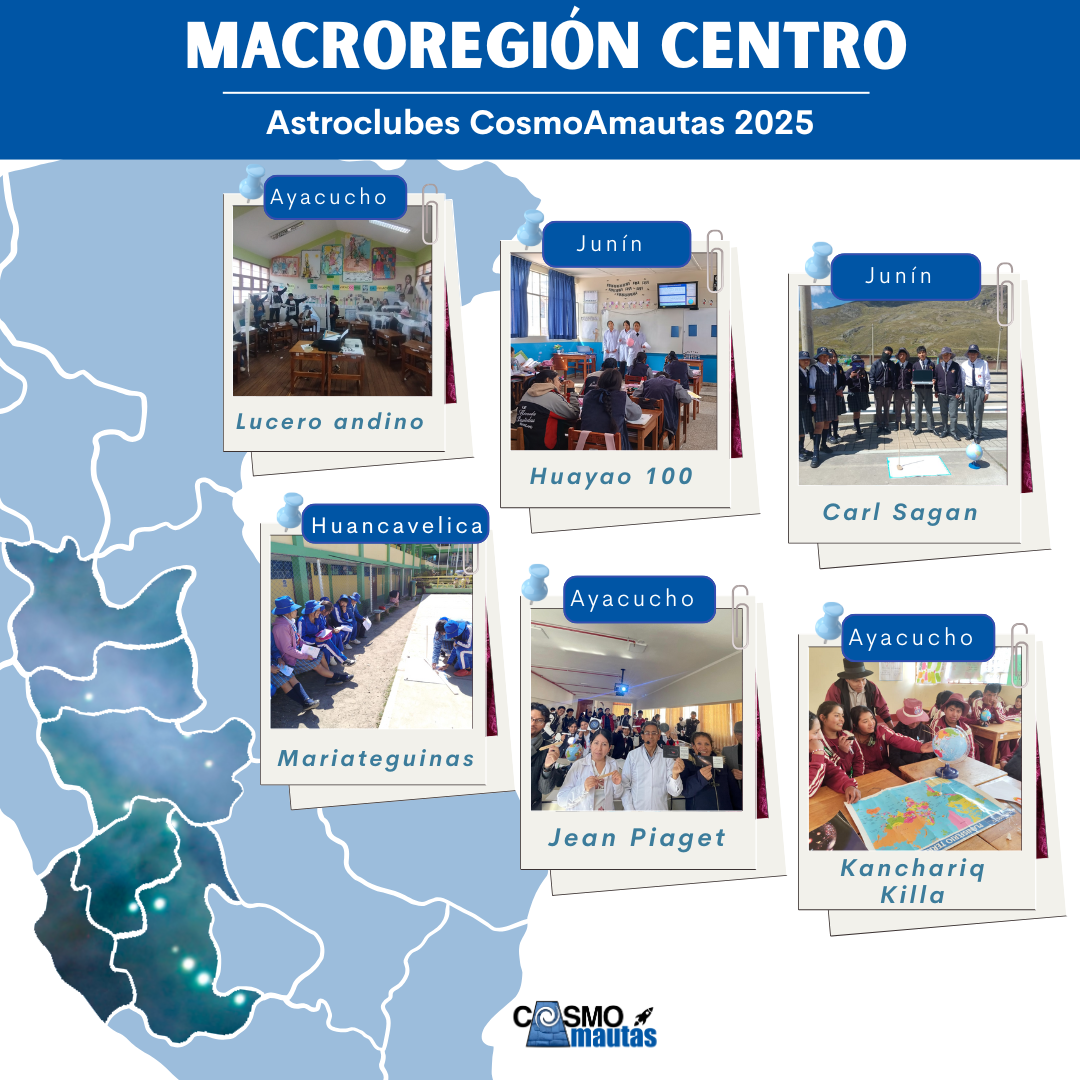
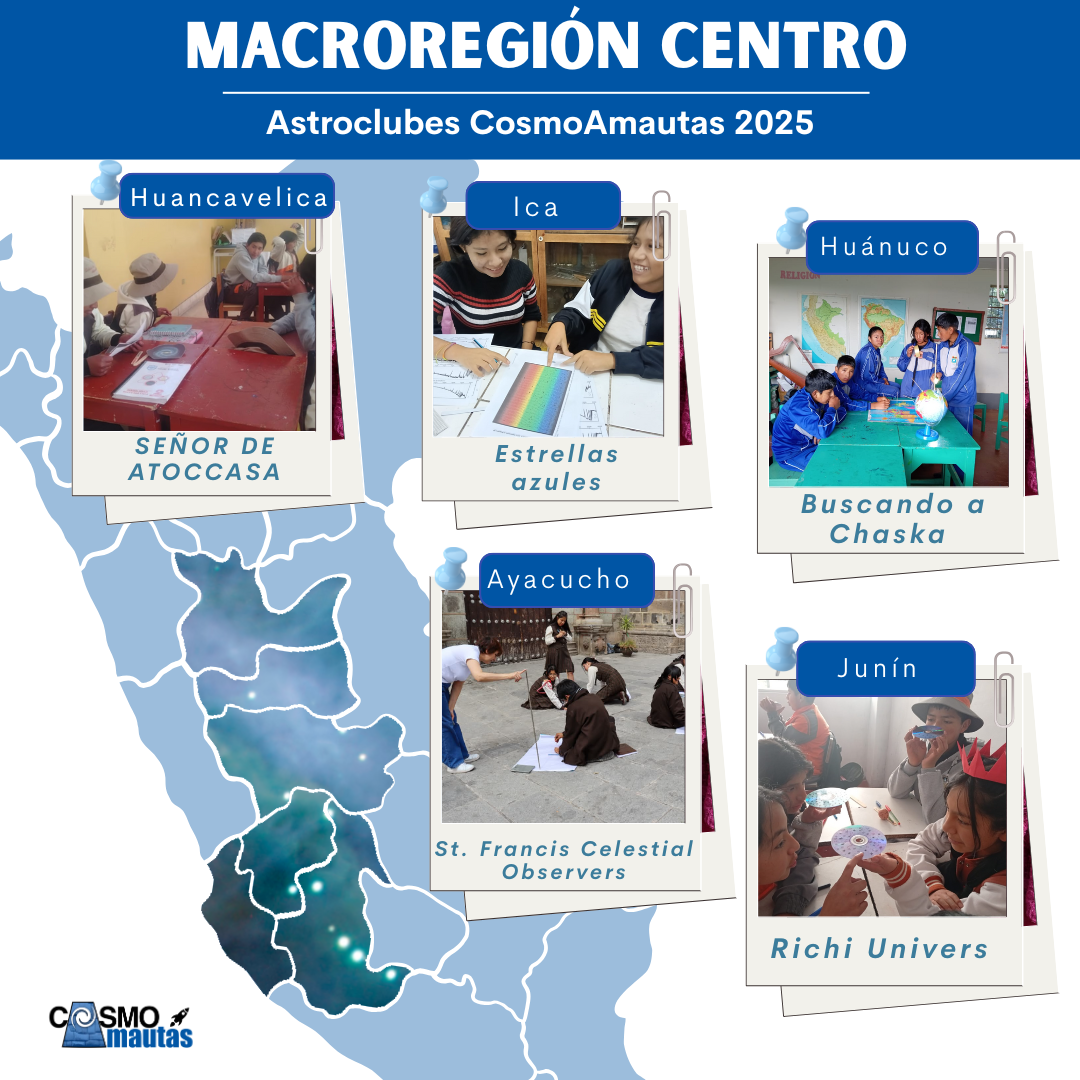
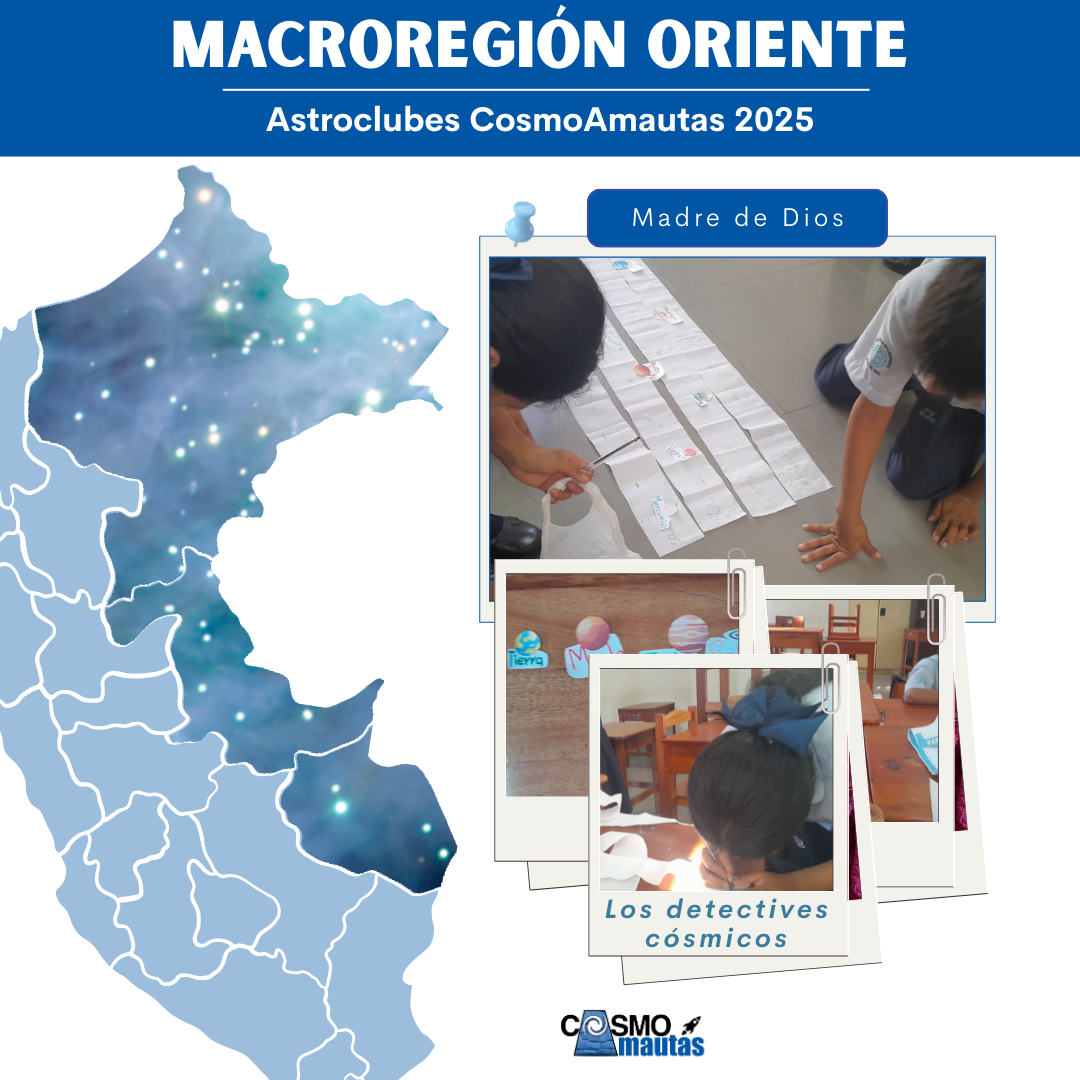
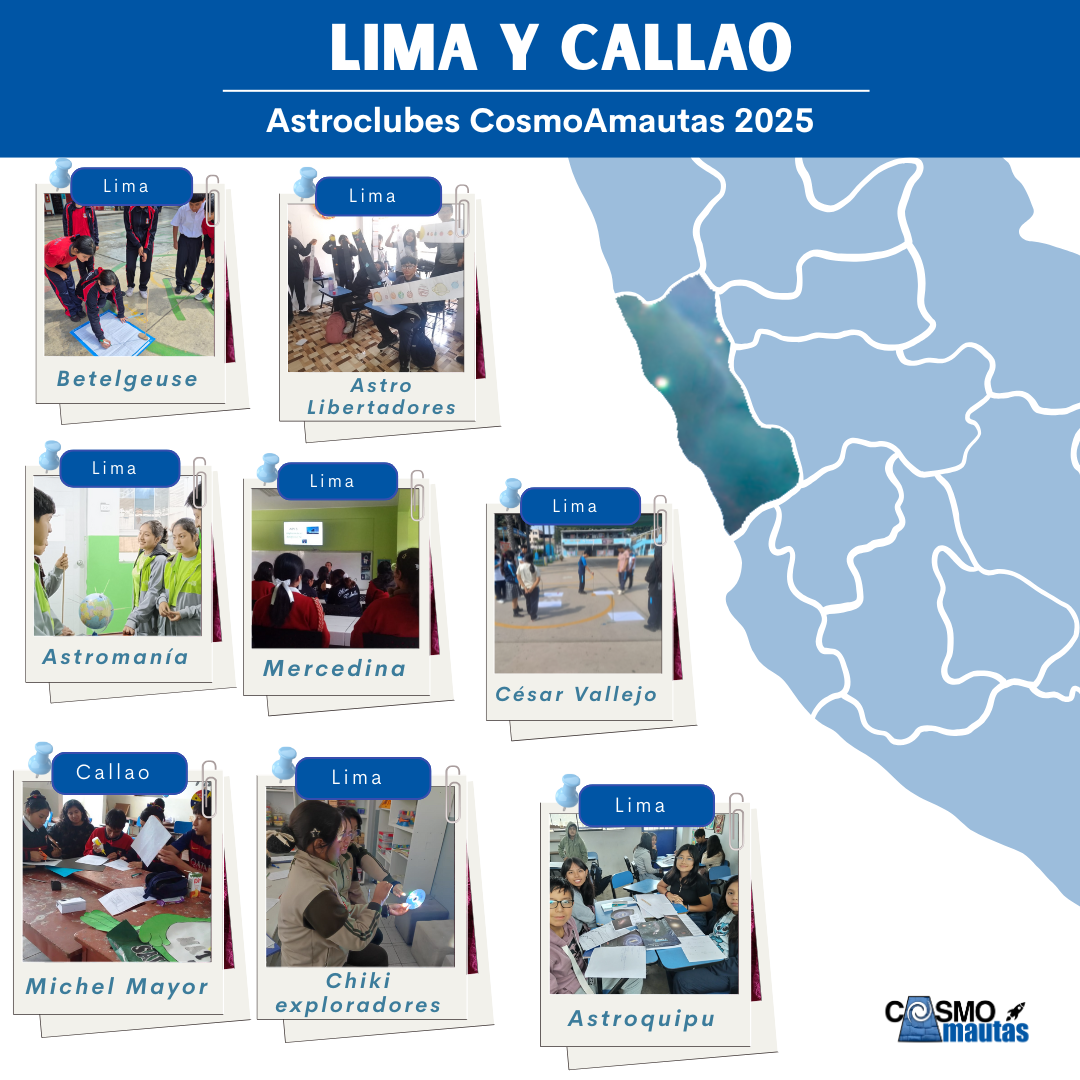
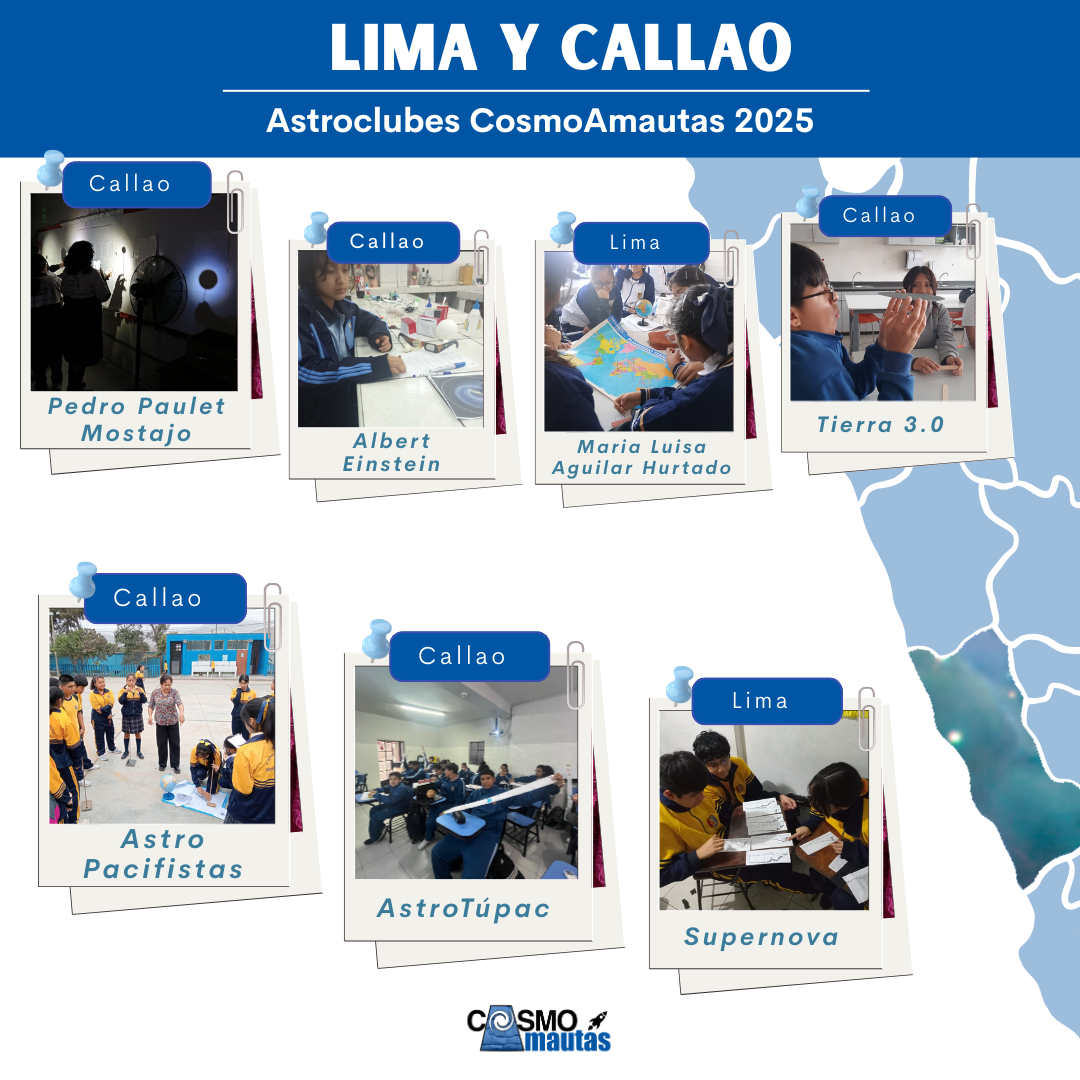
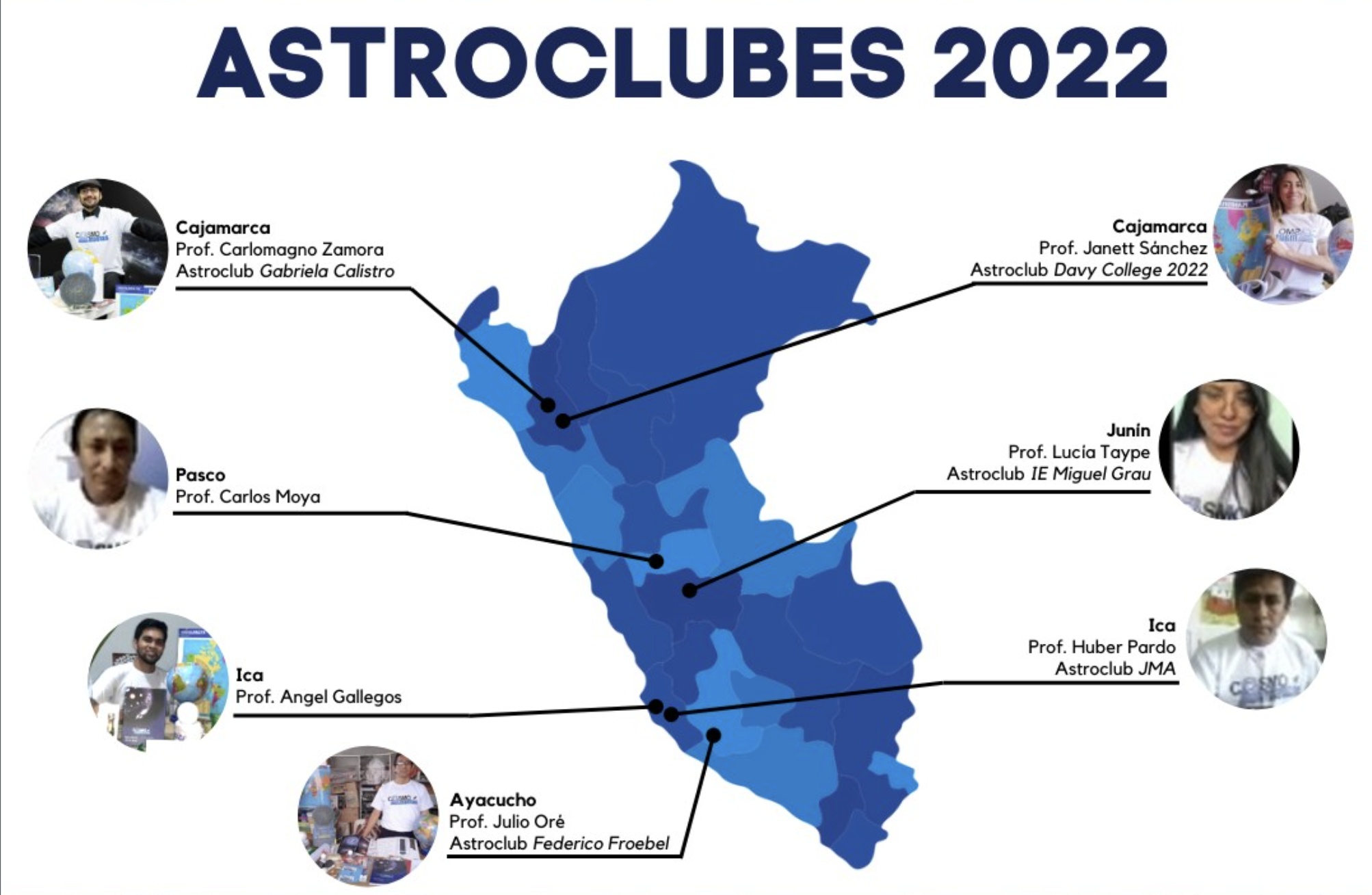
En ediciones anteriores, docentes de distintas regiones del Perú transformaron sus aulas y comunidades creando AstroClubes.
Desde zonas rurales hasta ciudades, estos clubes se convirtieron en espacios donde niñas y niños observan el cielo con telescopios,
construyen modelos del sistema solar, aprenden a leer mapas estelares y debaten sobre los misterios del universo.
Muchos docentes, que empezaron sin experiencia previa en astronomía, hoy son líderes locales en educación científica
y agentes de cambio en sus colegios. Sus estudiantes participan en ferias, comparten sus proyectos con otras escuelas
y se motivan a seguir carreras en ciencia y tecnología.
🌟 Tú puedes ser el próximo o la próxima docente en transformar la curiosidad de tus estudiantes en pasión por el conocimiento.
Con el acompañamiento de CosmoAmautas, ¡tu AstroClub también puede marcar la diferencia!
¿Qué son los AstroClubes CosmoAmautas?
Son espacios extracurriculares creados y liderados por docentes egresados del taller,
donde estudiantes curiosos
aprenden haciendo, experimentan y aplican el método científico de manera activa y colaborativa.
Además de fortalecer la educación científica, los AstroClubes tienen un enfoque inclusivo y buscan
inspirar especialmente a niñas y mujeres, aumentando su confianza en sus capacidades científicas
y mostrándoles que las carreras científicas también son para ellas.
Según reportes de docentes desde 2021, los AstroClubes se caracterizan por:
🌟 Grupos de entre 8 y 20 estudiantes inscritos.
🌟 Reuniones quincenales o mensuales de aproximadamente 2 horas, por las tardes.
🌟 Clubes activos por más de un año; algunos superan los tres años.
🌟 Espacios variados: laboratorios, aulas y áreas abiertas.
🌟 Actividades que incluyen indagación científica, observaciones astronómicas,
construcción de modelos, uso de simuladores, charlas, debates y participación en ferias.
Actividades destacadas:
✨ Observación de eclipses.
✨ El experimento de Eratóstenes en colaboración con otros AstroClubes.
✨ Pasacalles y desfiles para promover la astronomía en la comunidad.
✨ Ferias de ciencia y observación nocturna con telescopios.
Los docentes coinciden: sus estudiantes se muestran muy entusiasmados e interesados, y
demuestran un creciente interés por la ciencia.
In previous editions, teachers from across Peru transformed their classrooms and communities by creating AstroClubs.
From rural areas to cities, these clubs became spaces where children observe the sky through telescopes,
build models of the solar system, learn to read star maps and discuss the mysteries of the universe.
Many teachers who started with no previous astronomy experience are now local leaders in science education
and agents of change in their schools. Their students take part in fairs, share their projects with other schools
and find new motivation to pursue careers in science and technology.
🌟 You could be the next teacher to turn your students' curiosity into a passion for knowledge.
With CosmoAmautas' support, your AstroClub can make a difference too!
What are the CosmoAmautas AstroClubs?
They are extracurricular spaces created and led by teachers who have completed our workshop,
where curious students
learn by doing, experiment, and actively apply the scientific method in a collaborative way.
Beyond strengthening science education, the AstroClubs have an inclusive focus and aim to
especially inspire girls and women, building their confidence in their scientific abilities
and showing them that scientific careers are also for them.
Based on teachers' reports since 2021, the AstroClubs are characterized by:
🌟 Groups of between 8 and 20 enrolled students.
🌟 Biweekly or monthly meetings of about 2 hours, in the afternoons.
🌟 Clubs active for over a year; some have lasted more than three years.
🌟 A range of settings: laboratories, classrooms and open spaces.
🌟 Activities including scientific inquiry, astronomical observations,
model building, simulators, talks, debates and science fair participation.
Highlight activities:
✨ Eclipse observation.
✨ The Eratosthenes experiment carried out in collaboration with other AstroClubs.
✨ Parades and processions to promote astronomy in the community.
✨ Science fairs and night observation sessions with telescopes.
Teachers agree: their students are highly enthusiastic and engaged, and
show a growing interest in science.